Guatemala & Costa Rica Semester

Spanish Language & Community Engagement

A 3-Month Gap Year Program

Latin America Travel Program Group on Mountaintop

80 Days

Build Spanish language fluency: learn from local communities, and engage with diverse cultures throughout Guatemala and Costa Rica. For students interested in community engagement, sustainable agriculture, Latin American history, and dramatically improving their Spanish language skills through classes and cultural immersion.

Guatemala and Costa Rica are at the crossroads of living Mesoamerican culture and unparalleled ecological diversity.

From the Caribbean coast to the Pacific Ocean, communities shaped by both land and sea continue to adapt with resilience to the shifting environmental and social pressures of Central America. We invite you to step beyond the surface to learn through lived experiences: sharing daily life in rural homestays, engaging in personalized Spanish language study, contributing to community-led projects, and exploring grassroots movements shaping the region’s future.

ruins by river at sunset

Highlights & Outcomes

Build Language Fluency

Deepen Spanish through personalized small group classes and immersive homestays with welcoming local families

Meaningful Cultural Immersion

Experience extended urban and rural homestays for a deeper understanding of Guatemalan and Costa Rican culture and daily life

Cultural & Geographic Diversity

Hike lush volcanic landscapes, stay in indigenous Mayan communities, and learn directly from local knowledge keepers

Hands-on Community Engagement

Support community projects while exploring responsible approaches to service and learning new skills

city by lake at dusk

Your Journey Starts Here

Our travels begin near the colonial capital of Antigua, where we explore vibrant markets, hike coffee plantations, and start daily Spanish lessons. We ride the famous camioneta—a colorful and chromed-out version of a 1990s Blue Byrd school bus—to the sparkling shores of sacred Lake Atitlán, where we settle in for a week of homestays at our program base in the town of San Juan la Laguna.

In the mornings, we participate in intensive language instruction at a local school, and in the afternoons we immerse ourselves in Tz’utujil culture through independent projects and time with gracious host families. Crossing the lake to the town of San Lucas Toliman, we engage in a service project at the Mesoamerican Permaculture Institute, learning about traditional agriculture and the ethics of service engagement in an intercultural context.

From Pachaj, we venture into the Cuchumatanes Mountains, where families share stories of Guatemala’s recent civil war, deepening our understanding of human rights, indigenous resistance, and lasting economic inequality. Living with Maya families, we explore ancestral knowledge through Independent Study Projects with artisans, farmers, and community leaders, and volunteer with a community-led reforestation project.

Moving on from Guatemala, we board a plane to Costa Rica for our final month of the program. We quickly leave behind the over touristed sites in favor of time with local communities and grassroots initiatives. We live with welcoming families in a rural village, collaborate with a sustainability focused social enterprise, hike through pristine forests, and work on a cacao farm.

Our time in Costa Rica helps us reframe our experiences in Guatemala through a comparative lens, and gives us access to people and places far off the tourist track. Through rural homestays, intensive Spanish study, and hands-on projects, students return home with a deeper connection to land, culture, and the fascinating issues animating Central American communities.

Itinerary Example

Guatemala & Costa Rica Semester

Itinerary Example
The following is a sample itinerary based on past courses; actual itineraries are dynamic and may vary.
  • Week 1

    group learning about plants
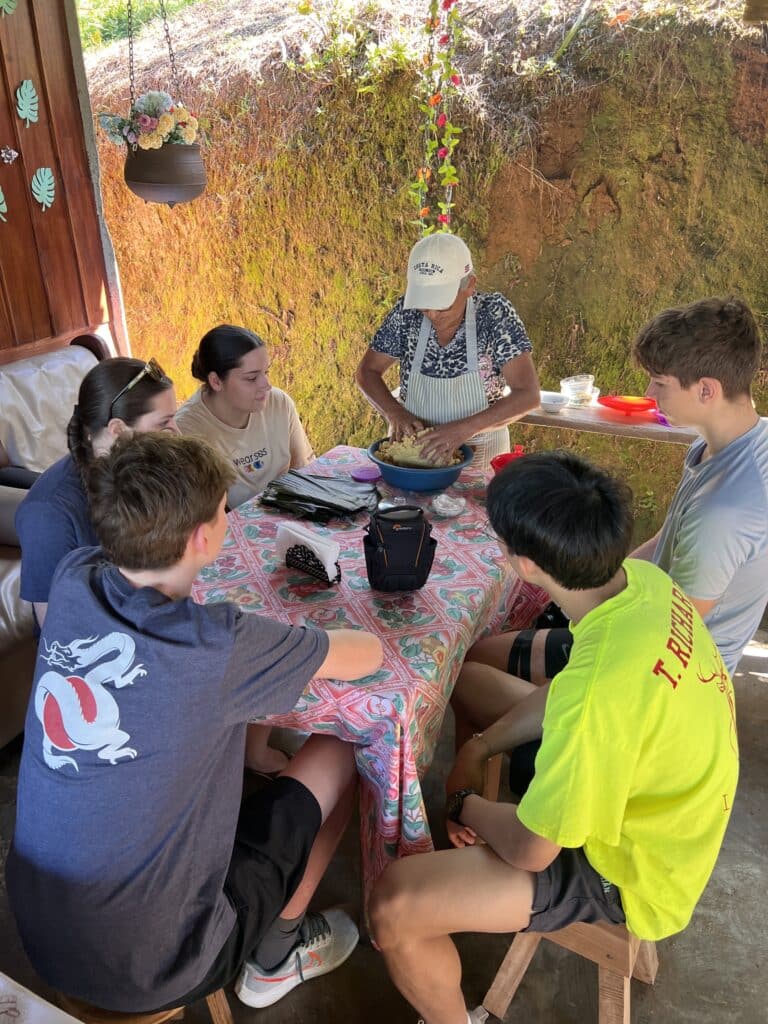
    people making food

    The semester begins with an orientation in the town of San Lucas Toliman on the shores of Lake Atitlan. Here we spend our days getting to know one another, setting goals for our time together, and learning how to safely navigate new places and experiences. San Lucas is home to the Mesoamerican Permaculture Institute, where we learn about traditional agricultural practices and how they can help respond to many of the issues facing contemporary Guatemalan society.

    During this phase, we practice Spanish, learn about cultural norms, try new foods and come together as a group. From our orientation sight we’ll move on to our first homestays in Quetzaltenango (Xela).

  • Week 2

    girls shearing sheep
    group in front of corn field

    In our urban homestays, we’ll be welcomed by families in the beautiful city of Quetzaltenango, also known as Xela, Guatemala’s second largest city. Through the daily life of our host families, we’ll get to know the rhythms, colors, and stories of this vibrant place. While in Xela, we’ll take Spanish classes that will help us connect more deeply with people in the community and strengthen our communication skills.

    We’ll also dive into Independent Study Projects (ISPs) centered on the arts and traditions that are deeply rooted in the region, from weaving and music to culinary practices. In addition, we’ll join workshops with inspiring local organizations such as the Red K’at, which are creating innovative spaces for cultural and community engagement. After our time in Xela, we will move north to Todos Santos Cuchumatán.

  • Weeks 3 - 4

    group walking on road with backpacks

    From Todos Santos, we begin a four day, three night trek through the misty highland mountains to the town of Nebaj. Along the way we camp at locals’ land who live off the land and traditional farming practices. By night we sleep in barns and alongside rivers and by day we walk through enchanting cloud forests and agricultural land.

    We end our trek in the Ixil triangle town of Nebaj. From Nebaj we transfer to the neighboring town of San Juan Cotzal. The Ixil triangle was a place of major focus by the army during the war in Guatemala and it makes a perfect setting to study the issues that led to this conflict as well as the process that has played out since the end of the war in 1996.

  • Weeks 5 - 8

    small wooden dock leading into lake
    boy learning to cook

    From Cotzal, we will head south back to the shores of Lake Atitlan, this time settling down in our program base in the town of San Juan la Laguna. In this lovely tz’utujil community, we have a program house, where students gather daily for lessons, workshops and independent study projects.

    Mornings are spent working one-on-one or in small groups with local Spanish teachers, and evenings are spent connecting closely with welcoming homestay families. During this period of the program each student will delve into an Independent Study topic of their choice, working with a local mentor to learn a craft or explore a theme of study.

  • WEEKS 9 - 10

    kids gathered in jungle area with small structure
    person looking up with binoculars

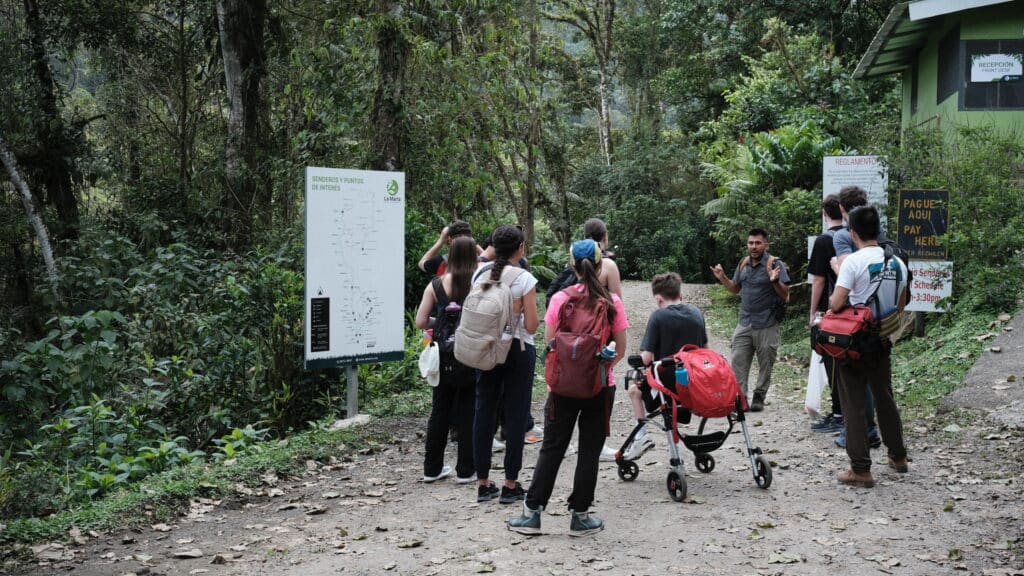
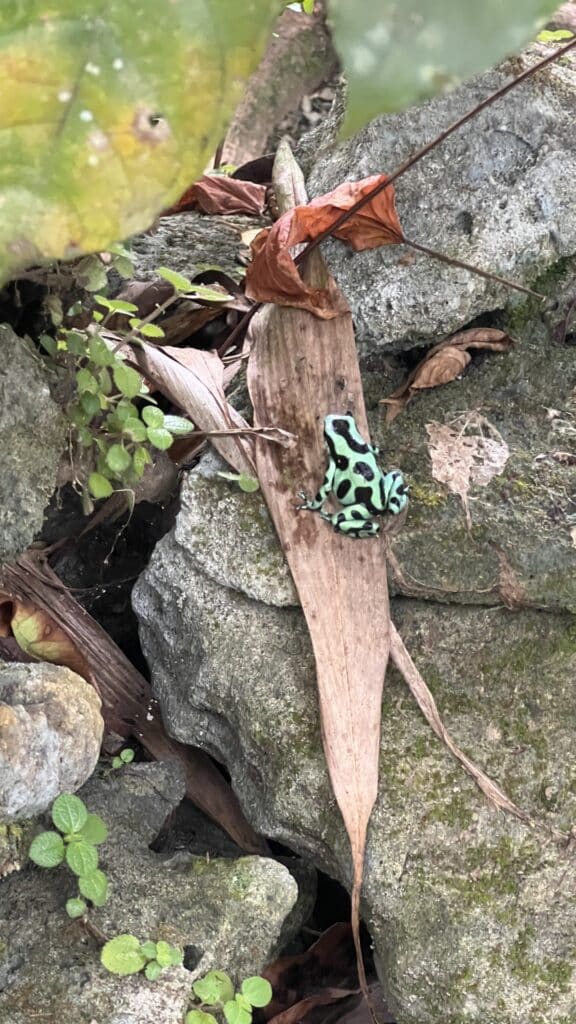
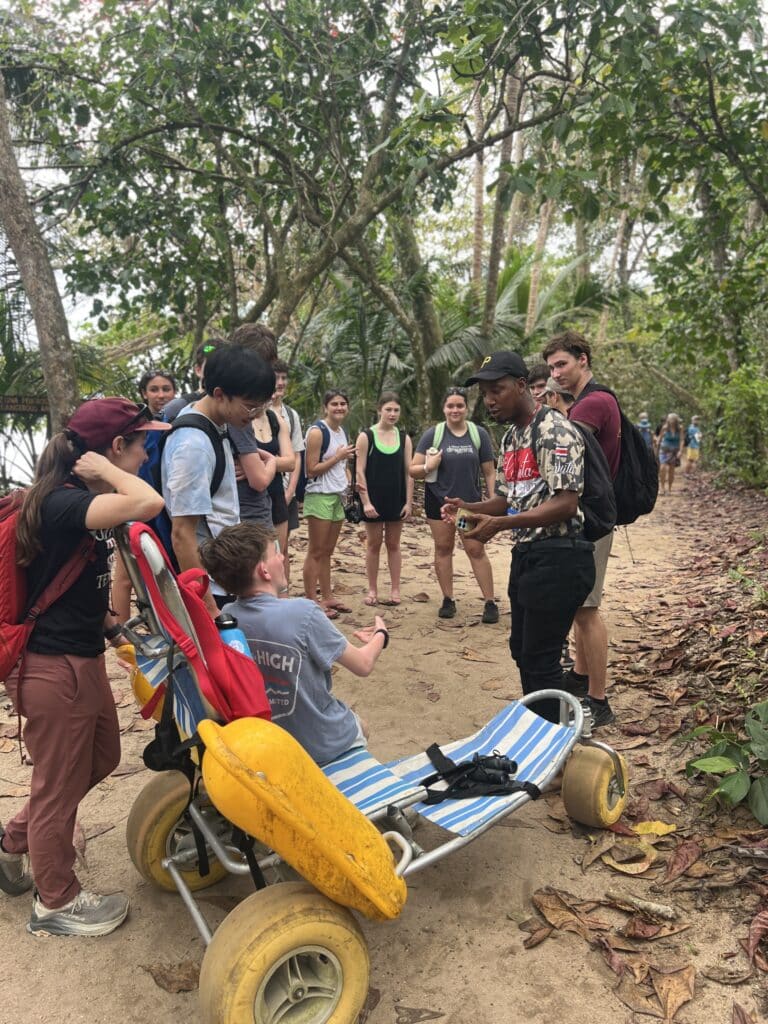
    After your adventures in Guatemala, your journey continues with a flight to Juan Santamaría International Airport in Costa Rica. Your first stop is Turrialba, a small town nestled in the shadow of the Turrialba Volcano. Here, surrounded by lush rainforest, you’ll spend your days exploring trails, learning about local conservation efforts, and sharing delicious, nourishing meals with the locals.

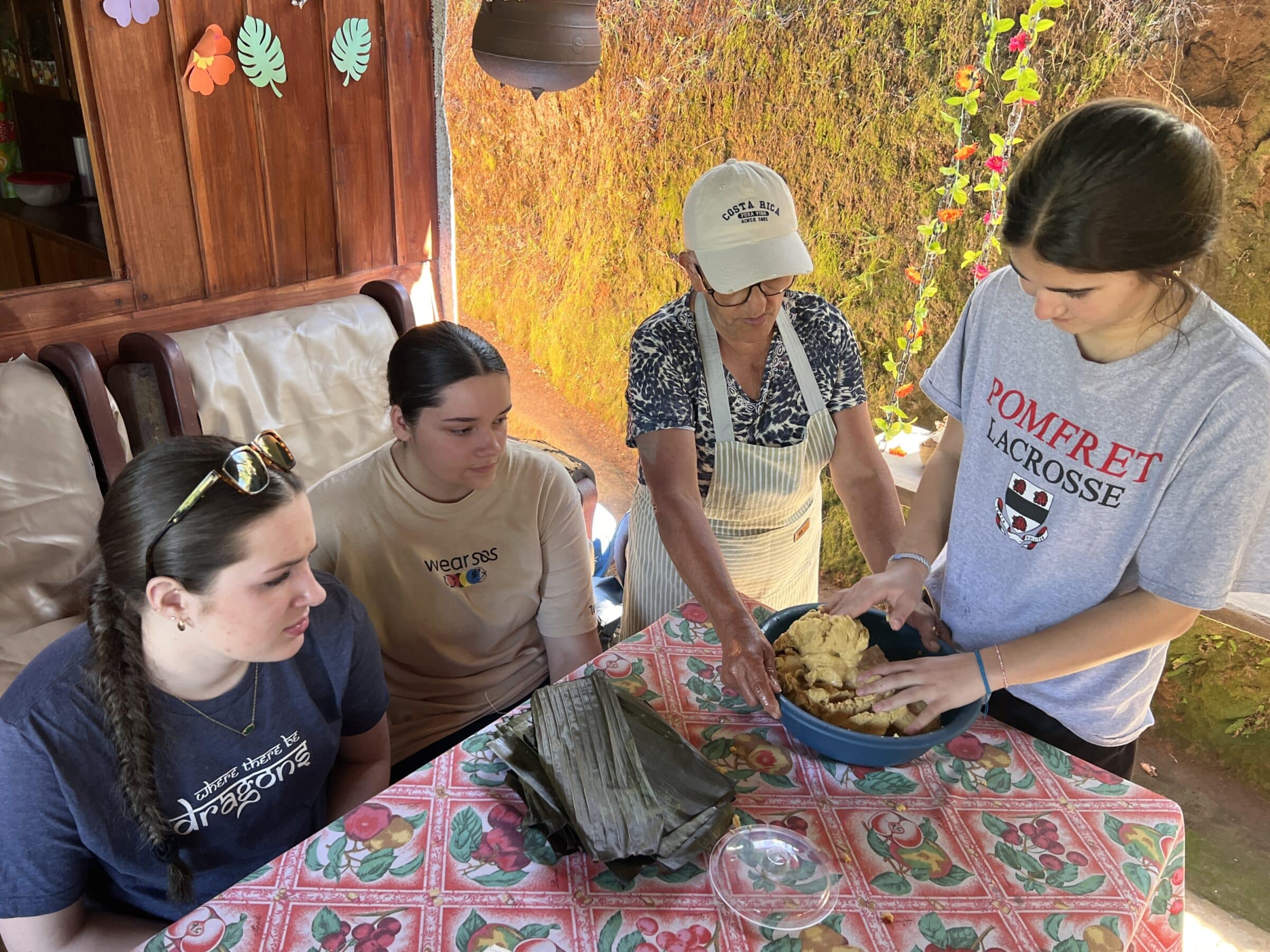
    One of your first visits will be to WearSOS, a local social enterprise that transforms retired airplane seats into upcycled goods. It’s a place where creativity meets sustainability—and where impact is measured not only in products, but in opportunities for the communities. From there, you’ll head to Mollejones, a small rural village where you’ll be welcomed into homestays.

    Life slows down here: you’ll wake up to roosters, help with daily chores, and spend evenings around wood stoves sharing stories. It’s less about observing culture and more about becoming part of it. By the end of week 10, you’ll carry with you a sense of belonging—to a place, a community, and to something larger than yourself.

  • Week 11

    group smiling with greenery around them
    man wrapping dirt in large green leaf

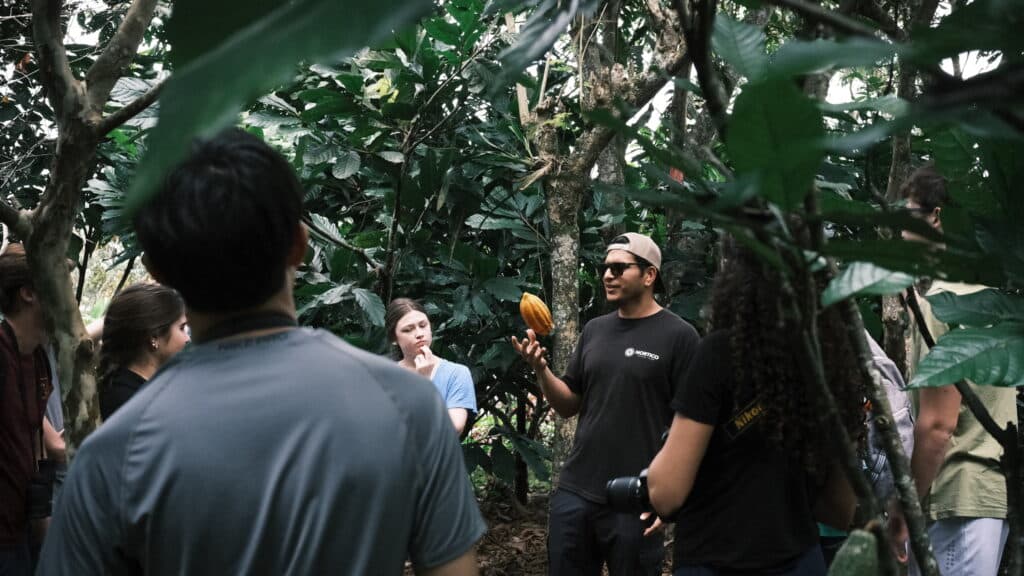
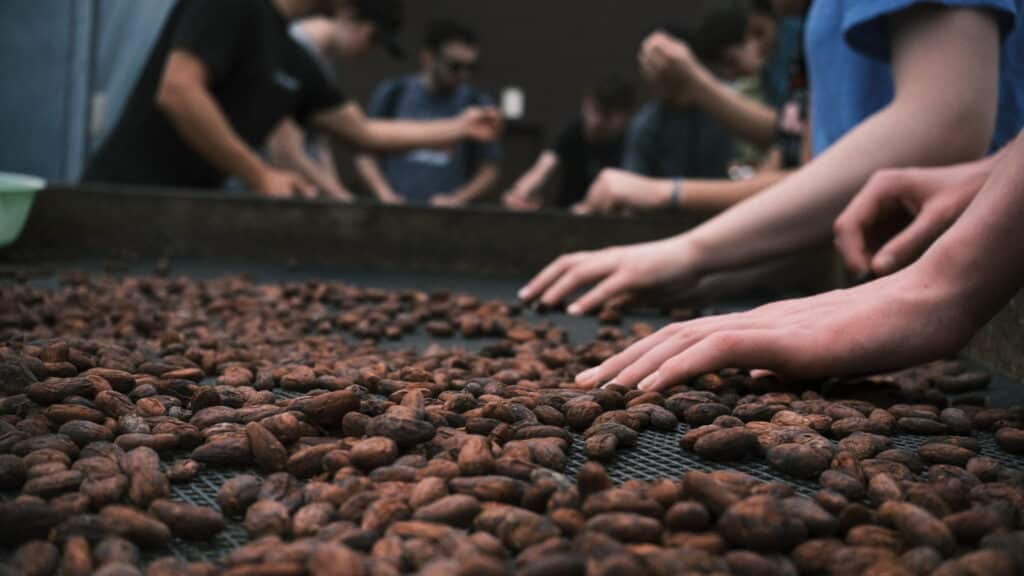
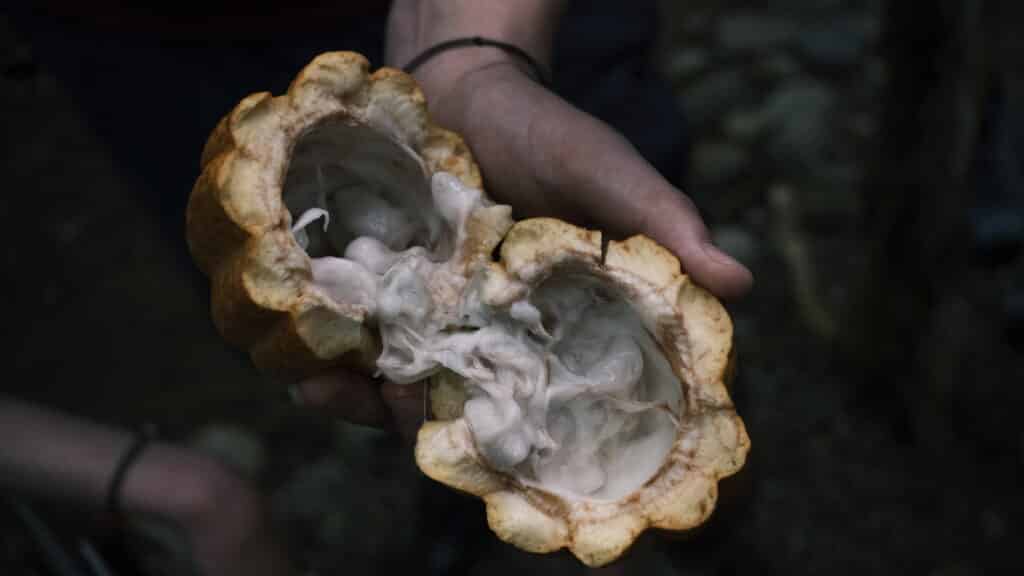
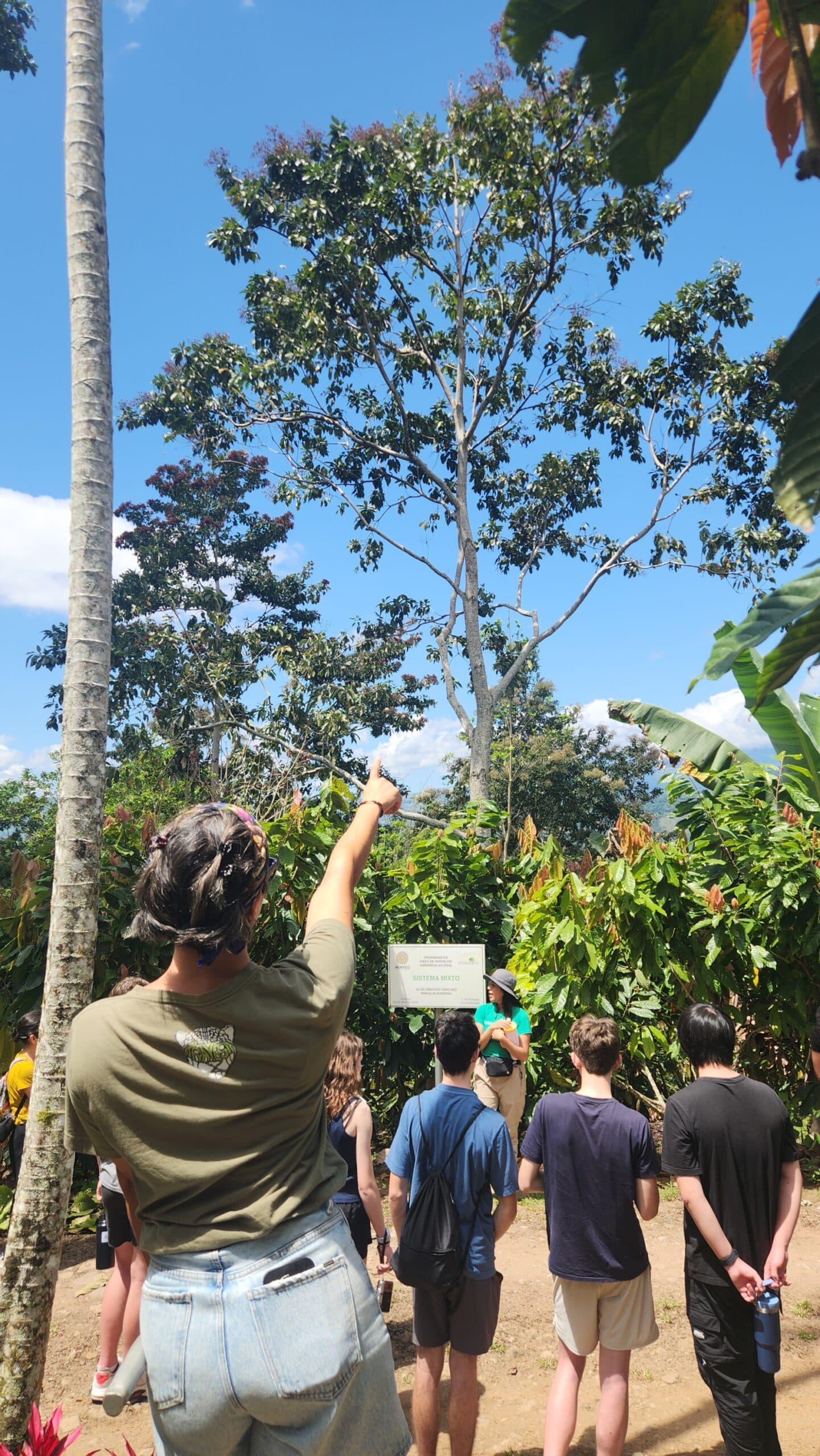
    This week, cacao becomes your compass. At Nortico, a family-run organic cacao farm, you’ll follow the farm-to-bar process—harvesting pods, roasting, grinding, and tasting chocolate made the traditional way. It’s hands-on, meaningful work that connects you to a bigger conversation about sustainability, food systems, and land stewardship.

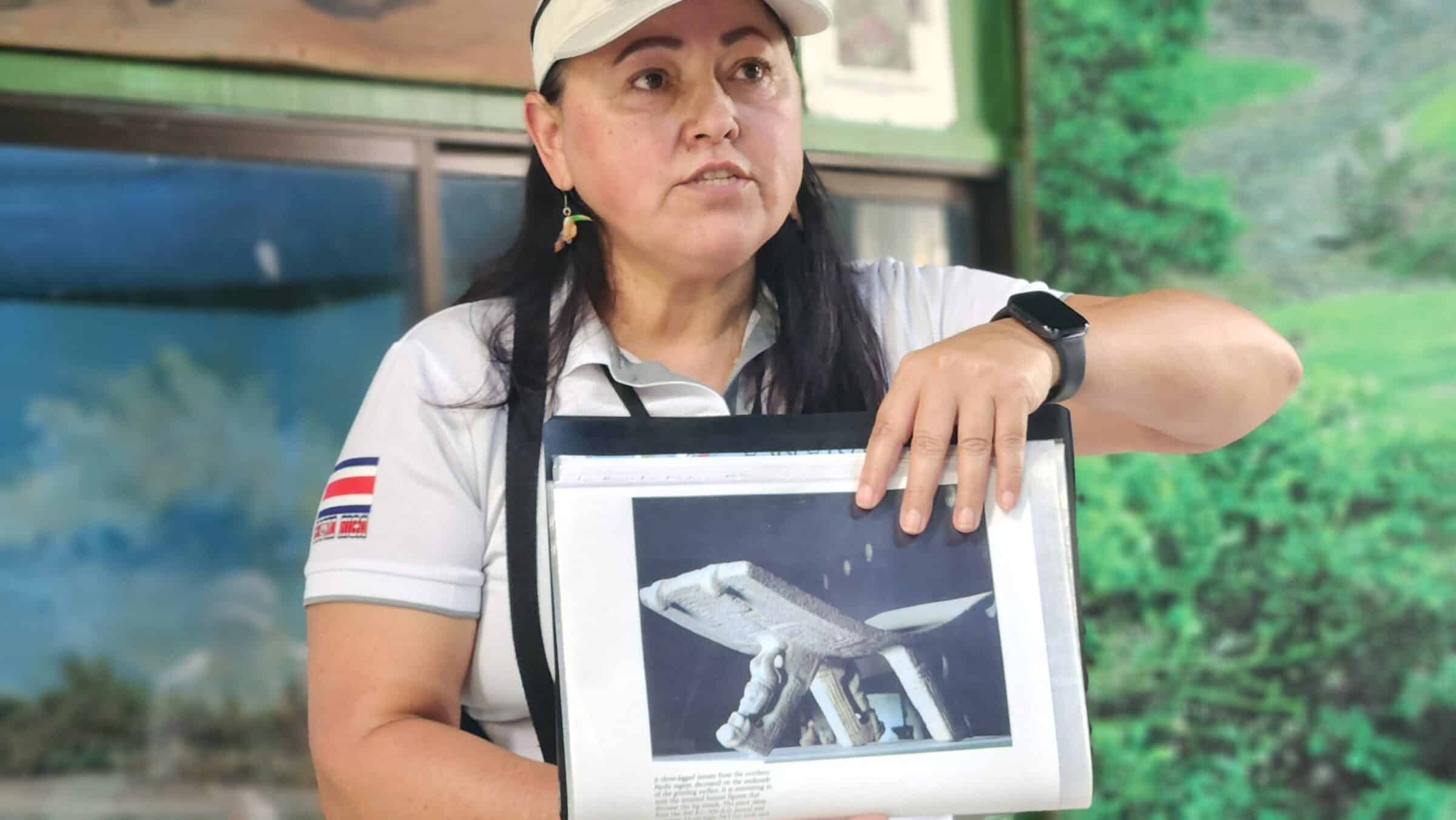
    Your learning continues in reforestation projects led by women, where conservation takes root both literally and socially. You’ll spend time in forests and wetlands, planting, listening, learning. The journey takes you to visit members of the Cabécar Indigenous community, who live in the remote Talamanca mountains. Through stories, language, and ritual, they offer a perspective on conservation that blends science with tradition—showing how protecting the earth is as much about culture and relationships as it is about resources.

  • Week 12

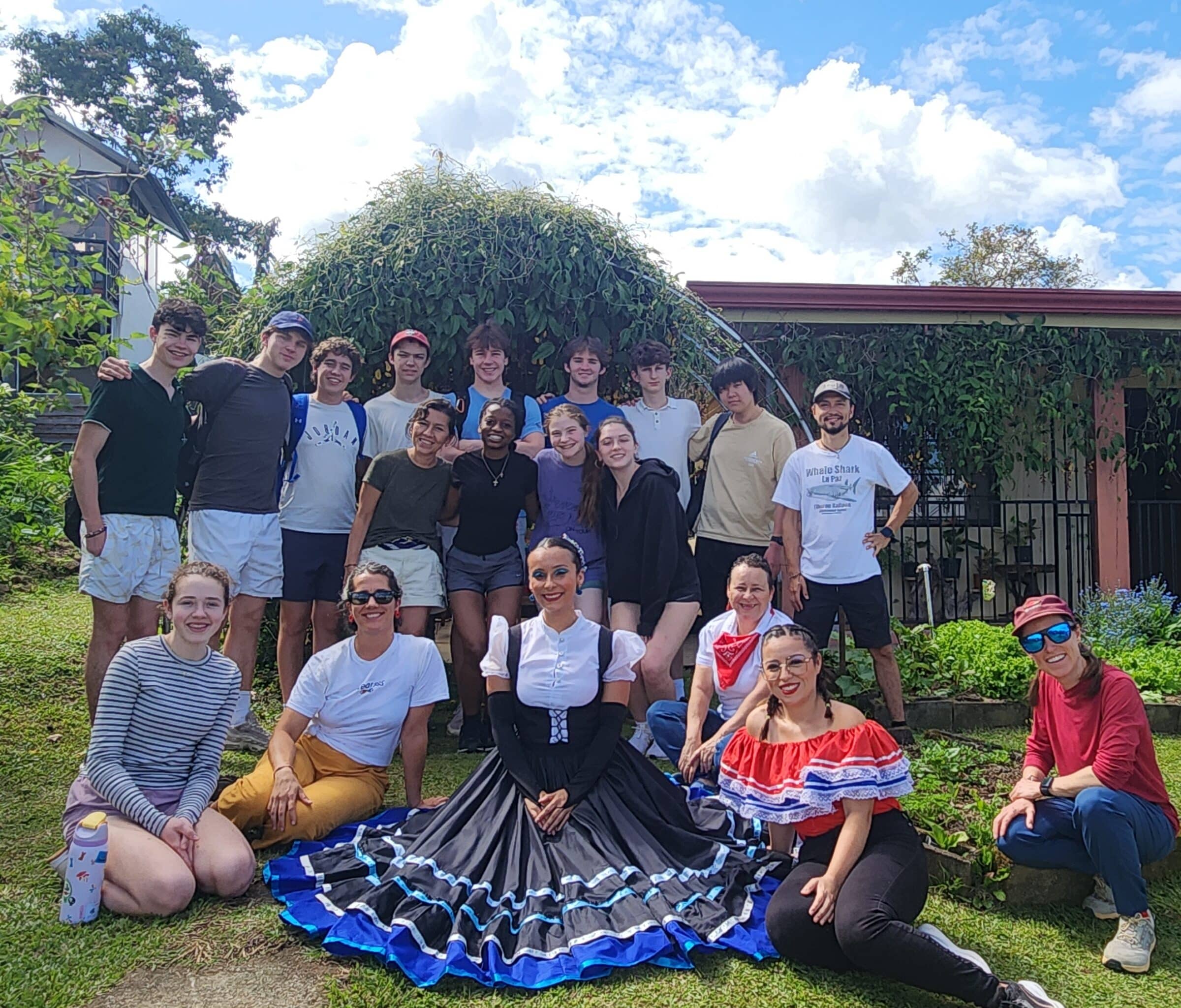
    group holding the Costa Rican flag

    Turning east, the land shifts. Costa Rica’s Caribbean coast has a different rhythm—calypso music in the air, the smell of coconut rice and plantains, and a deep Afro-Caribbean cultural legacy. You’ll work alongside local leaders and conservationists in turtle protection efforts, witnessing firsthand the nighttime rituals of sea turtles returning to nest. It’s humbling and unforgettable.

    As the program winds down, you return to the mountains, where the cool mist and dense forest offer space to reflect and quiet moments invite you to process everything you’ve experienced. These final days are for connecting the dots—between countries, between cultures, between who you were at the start and who you are now. You won’t be leaving with just photos or souvenirs—you’ll carry stories, questions, and a deeper sense of your place in the world.

Language Study

Spanish intensive instruction through daily small group lessons (2-4 students) for approximately 2-4 hours/day (~6 weeks total throughout the semester) taught by professional language instructors. Immersion through homestays, ISPs, and daily interaction with locals.

Homestay

Multi-week homestays in several communities in Guatemala and Costa Rica pared with language and cultural immersion in diverse settings.

Social & Environmental Justice

Modernization and globalization, impact of education and tourism, exploration of minority empowerment issues, sustainable agriculture, and Latin American history.

Religious & Spiritual Traditions

The syncretism of Catholicism and Maya spirituality, Maya cosmo-vision, cycles of time, Latin American Protestantism, community based movements.

Independent Study Project

ISPs facilitated primarily in San Juan la Laguna. Multiple opportunities for study with local organizations and mentors. Options include traditional weaving and textiles, Maya spirituality, medicinal plants, sustainable agriculture, painting and the arts, and exploration of socio-political issues.

Learning Service

Volunteering at the Chico Mendes reforestation project, work with sustainable agriculture, collaboration with local NGOs and community based projects.

Rugged Travel

Bus, truck, and boat travel. Hikes to remote villages.

Trekking

Trekking may include introductory hikes through cloud forests, to Mayan ruins in the jungle, lake hiking, and non-technical volcano ascents, with a possible overnight trek.

Optional College Credit

To deepen your experience abroad, you may choose to enroll in optional college-level coursework during the program. Those who enroll will be invoiced for an additional college credit fee on top of the program cost.

Students who take a college credit course will receive an official transcript from our university School of Record upon successful completion of the program. Taking advantage of the college credit option may make 529 plan funds eligible toward the entire program cost.

Learn About College Credits

Through our School of Record, you have the option to enroll in 1-3 of the following courses for college credit:

  • COLS 191: Self & Culture in Experiential Cohorts
  • CTE 191: Introduction to Leadership Development
  • CTE 292: Introduction to Ethical Volunteering
See Course Offerings

Meet a Few of Our Instructors

Experienced educators. Community builders. Life mentors. With deep regional expertise and local language fluency, our instructors are skilled at providing context for the student experience and building cultural bridges. We collectively draw upon personal networks to create opportunities for connection and guide students along their journey.

Meet Our Instructors

Frequently Asked Questions

More Questions About Gap Year Travel?

See All Gap Year FAQs

Let's Connect

Schedule a Call

Request a Catalog

Dive Deeper