China

Immersive Mandarin and Modern China

A 8-Week Gap Year Program

Terraced Rice Paddies China

56 Days

Deepen your Mandarin language skills and cultural understanding through carefully selected homestay, focused small-group language classes, and daily opportunities to put your learning into practice. Designed for students of all language levels who are eager to strengthen their communication skills and build a foundation for future study, work, and travel in the region.

This program is available beginning Fall 2027.

At the crossroads of ancient traditions and global influence, China offers a powerful lens for understanding our changing world.

Meaningful engagement with local people brings China’s deep-rooted traditions and rapidly changing society into focus. Through immersive Mandarin learning, homestays, and Independent Study Projects (ISPs), students build connections, explore daily life, and gain firsthand perspectives on the country’s cultural diversity and evolving place in the world.

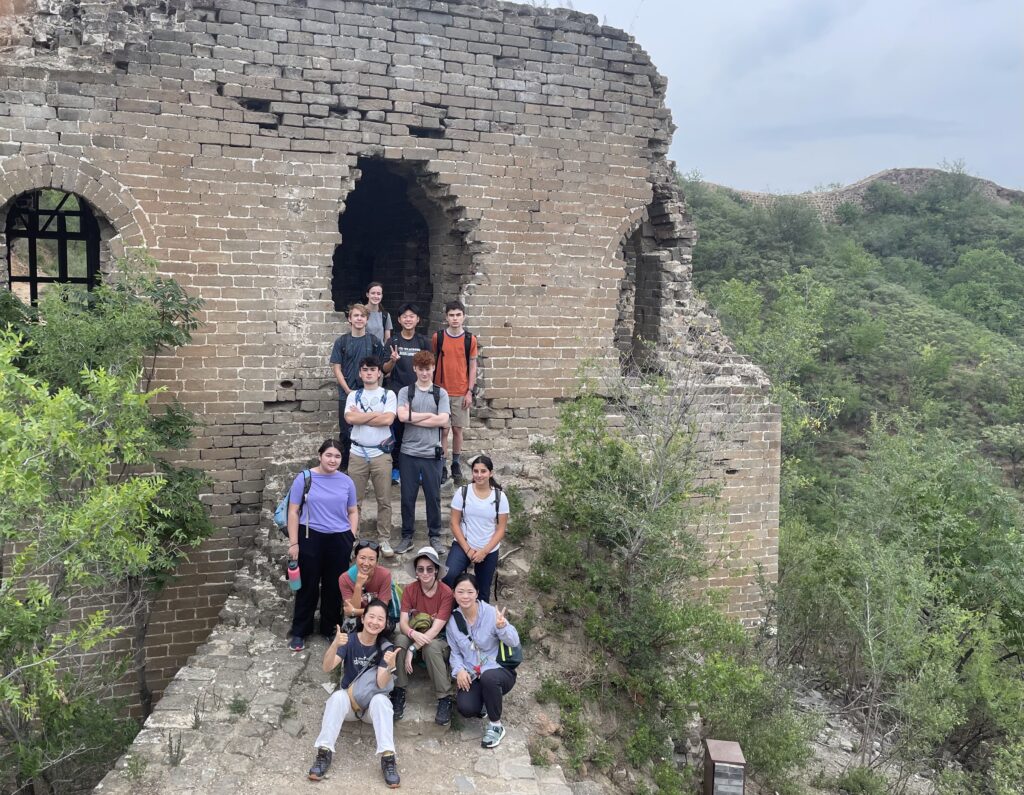
people sitting on steps of the great wall

Highlights & Outcomes

Build Mandarin Fluency

Practice Mandarin through intensive language classes, homestays, and daily community interaction.

Gain Practical Regional Experience

Develop the cross-cultural exposure needed for future study, work, and travel related to China.

Study Arts & Cultural Traditions

Pursue independent study projects on traditional crafts, music, or cultural practices.

Discover China's Complexity

Live in urban and rural areas, exploring China’s cultural and ecological diversity.

The Beijing Palace Museum
line drawing of China

Your Journey Starts Here

Our journey begins in Beijing, where ancient history and contemporary life exist side by side. After orientation near the Great Wall, students explore the capital’s historic neighborhoods, cultural landmarks, and dynamic urban spaces, gaining an introduction to the forces that have shaped China past and present.

We then travel south to Kunming, the “city of eternal spring,” which becomes our home for three weeks. Students live with homestay families, take daily Mandarin classes, and engage in Independent Study Projects (ISPs). Language learning extends well beyond the classroom as students practice Mandarin with host families, navigate local markets and neighborhoods, and build the confidence to communicate independently. Through lectures, discussions, and community engagement, we explore traditional culture, contemporary society, and the rapid changes transforming life in China.

Leaving the city behind, we spend several days hiking through Yunnan’s mountainous landscapes before pausing for mid-course reflection. We then settle into a rural homestay, where students continue practicing Mandarin while learning from local families and exploring the rhythms, traditions, and livelihoods of rural China. The experience offers an opportunity to compare urban and rural perspectives and consider the complexities of development and cultural change.

During the student-led “Expedition Phase,” students apply their language, leadership, and travel skills to co-design and navigate their own journey. The semester concludes with transference and reflection, leaving students with stronger Mandarin skills, greater independence, and a deeper understanding of the many layers of contemporary China.

Itinerary Example

China Semester

Itinerary Example
The following is a sample itinerary based on past courses; actual itineraries are dynamic and may vary.
  • Week 1

    group at the great wall
    statue outside of Chinese temples

    We begin our journey near the Great Wall, where students settle into the rhythms of group travel and establish foundations for the semester ahead. Through orientation activities, introductory language lessons, and excursions along this iconic landscape, we explore how China’s long history continues to shape its society today. We then travel into Beijing, where imperial landmarks, traditional neighborhoods, and rapidly changing urban spaces provide our first window into contemporary China.

  • Weeks 2 - 4

    people in Chinese city
    boy learning to cook

    Traveling south to Yunnan Province, we settle into Kunming for our language and cultural immersion. For three weeks, students live with local homestay families and participate in daily small-group Mandarin classes designed to strengthen practical communication skills. The city becomes an extension of the classroom as students apply new vocabulary while shopping at markets, ordering food, navigating transportation, and spending time with their host families.

    Students also pursue Independent Study Projects (ISPs), working with local mentors to explore individual interests such as cooking, traditional arts, folk music, traditional Chinese medicine, martial arts, etc. With time to establish routines and relationships, the homestay experience allows students to move beyond being visitors and develop greater confidence using Mandarin in everyday life.

  • Weeks 5

    group hiking in Tiger Leaping Gorge
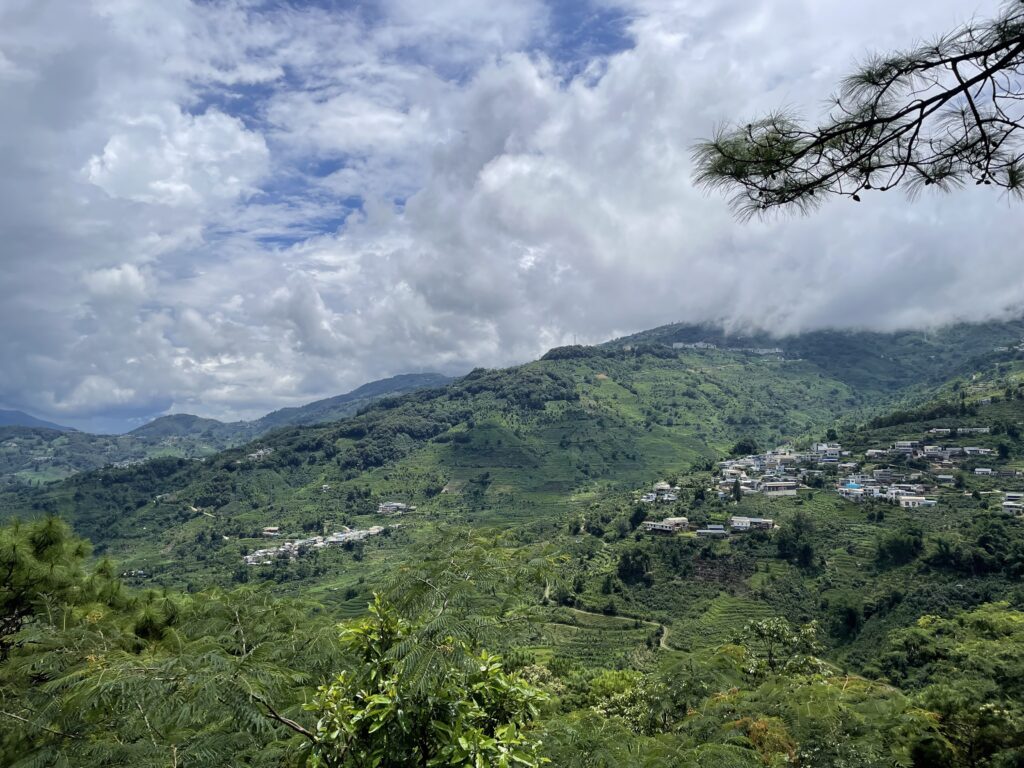
    villages on lush green hillside

    Leaving the rhythms of city life behind, we journey into Yunnan’s mountainous landscapes for several days of hiking. Hiking slows our pace and offers a different perspective on the province’s extraordinary ecological and cultural diversity. Along the way, students practice skills necessary for traveling responsibly through rural environments while encountering communities and landscapes increasingly connected to China’s broader economic transformation.

    Following the hike, we pause for our mid-course reflection, a time and space dedicated for reassessing personal and group goals, and prepare for the transition into a more rural setting and more opportunities for student autonomy and independence.

  • Weeks 6 - 7

    people smiling takin a selfie and eating dinner together at a table

    The rural homestay offers an opportunity to experience a different lifestyle in China. Living with local families, students participate in the daily rhythms of the rural community while continuing to practice the Mandarin skills developed during their time in Kunming. Depending on the season and location, days may include working alongside host families in the fields, exploring surrounding farms and villages, preparing meals, visiting local markets, or learning about regional traditions and livelihoods.

    The differences and similarities of the urban and rural homestays invites students to examine questions of development, migration, cultural continuity, and the changing relationship between China’s cities and countryside.

  • Week 7 - 8

    people riding bus and giving peace sign
    Bejing at night

    During the student led Expedition Phase, responsibility for the journey increasingly shifts to the students. Drawing on skills developed throughout the semester, the group works together to design and carry out several days of independent travel. Students research destinations, arrange transportation and lodging, manage a group budget and communication, and make decisions together as they navigate the challenges and rewards of travel in China.

    We conclude the semester with a transference, stepping away from the pace of travel to reflect on the experiences and relationships of the previous eight weeks. Students consider how their Mandarin has developed, how their understanding of China has changed, and how lessons in communication, leadership, adaptability, and cross-cultural engagement can carry into life at home and future study, work, and travel.

Language Study

Intensive Mandarin language study throughout the program through small group instruction with language tutors, homestay immersion, and daily interactions with locals.

Homestay

Extended urban and rural homestays for an in-depth and comprehensive cultural immersion in different regions and cultures of China.

Independent Study Project

ISPs facilitated throughout the program: Traditional Chinese Medicine, calligraphy, ink painting, Tai Ji Quan (Tai Chi)/martial arts, tea ceremony, cooking.

Social & Environmental Justice

Development, socio-economic status, health, aging population, mass tourism, cultural survival.

Religious & Spiritual Traditions

Introduction to how Buddhism, Daoism, Islam and Confucianism manifested differently across regions.

Trekking

Numerous day hikes and/or additional multi-day treks with no prior experience needed, depending on student group interest.

Rugged Travel

Public train and bus travel, village homestays, bicycles, and short hikes.

Learning Service

Conversations with local NGOs and communities to understand pressing local issues.

Optional College Credit

To deepen your experience abroad, you may choose to enroll in optional college-level coursework during the program. Those who enroll will be invoiced for an additional college credit fee on top of the program cost.

Students who take a college credit course will receive an official transcript from our university School of Record upon successful completion of the program. Taking advantage of the college credit option may make 529 plan funds eligible toward the entire program cost.

Learn About College Credits

Through our School of Record, you have the option to enroll in 1-4 of the following courses for college credit:

  • COLS 191: Self & Culture in Experiential Cohorts
  • CTE 191: Introduction to Leadership Development
  • CTE 292: Introduction to Ethical Volunteering
  • CHIN 191: Mandarin I
  • CHIN 291: Mandarin II
See Course Offerings

Meet a Few of Our Instructors

Experienced educators. Community builders. Life mentors. With deep regional expertise and local language fluency, our instructors are skilled at providing context for the student experience and building cultural bridges. We collectively draw upon personal networks to create opportunities for connection and guide students along their journey.

Meet Our Instructors

Frequently Asked Questions

More Questions About Gap Year Travel?

See All Gap Year FAQs

Let's Connect

Schedule a Call

Request a Catalog

Dive Deeper